So a member of the FB Wexford has moved to a different pattern and is selling off her Wexford. Among the items was this peculiar basket of dubious provenance, which is now mine.
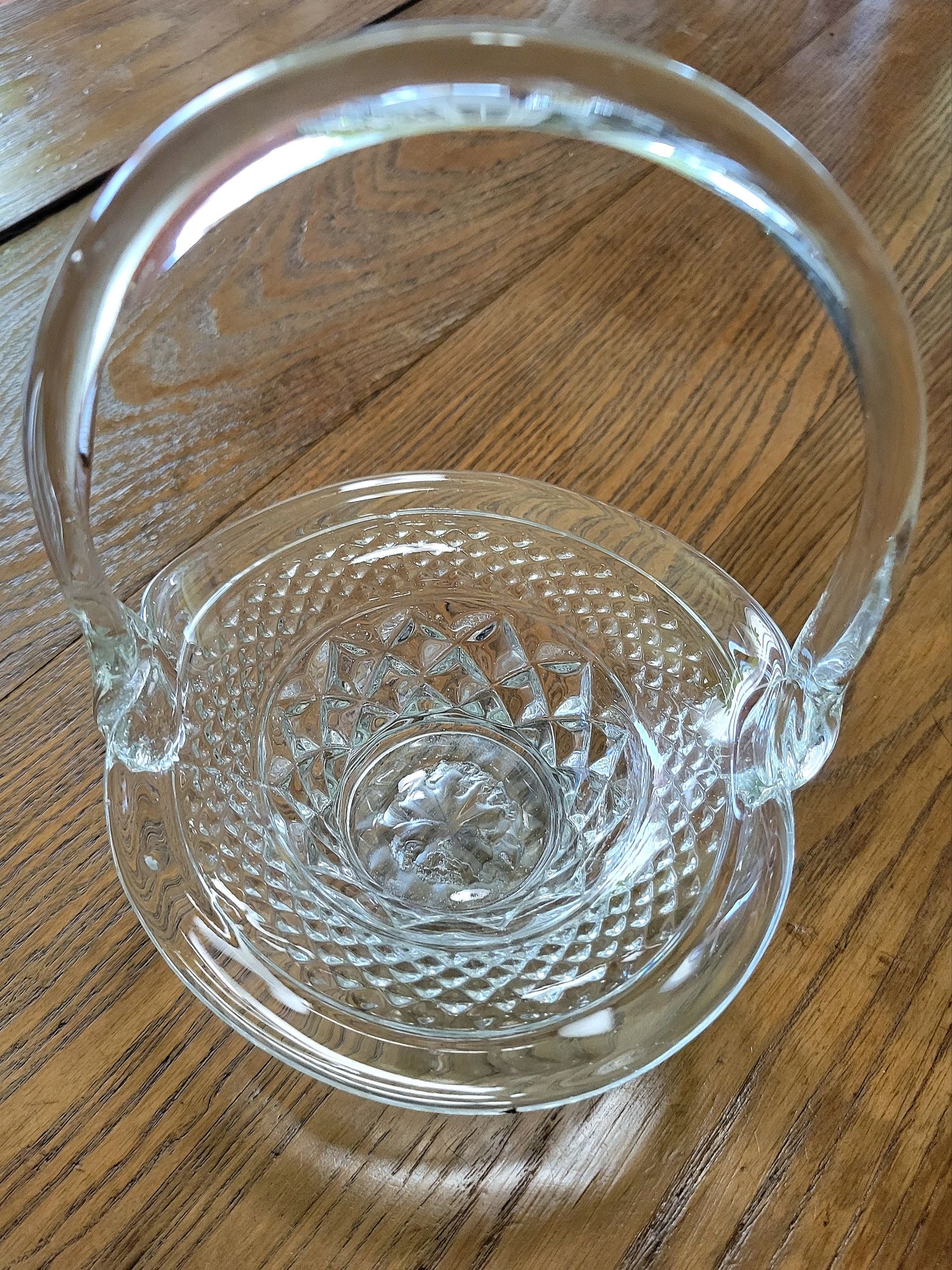
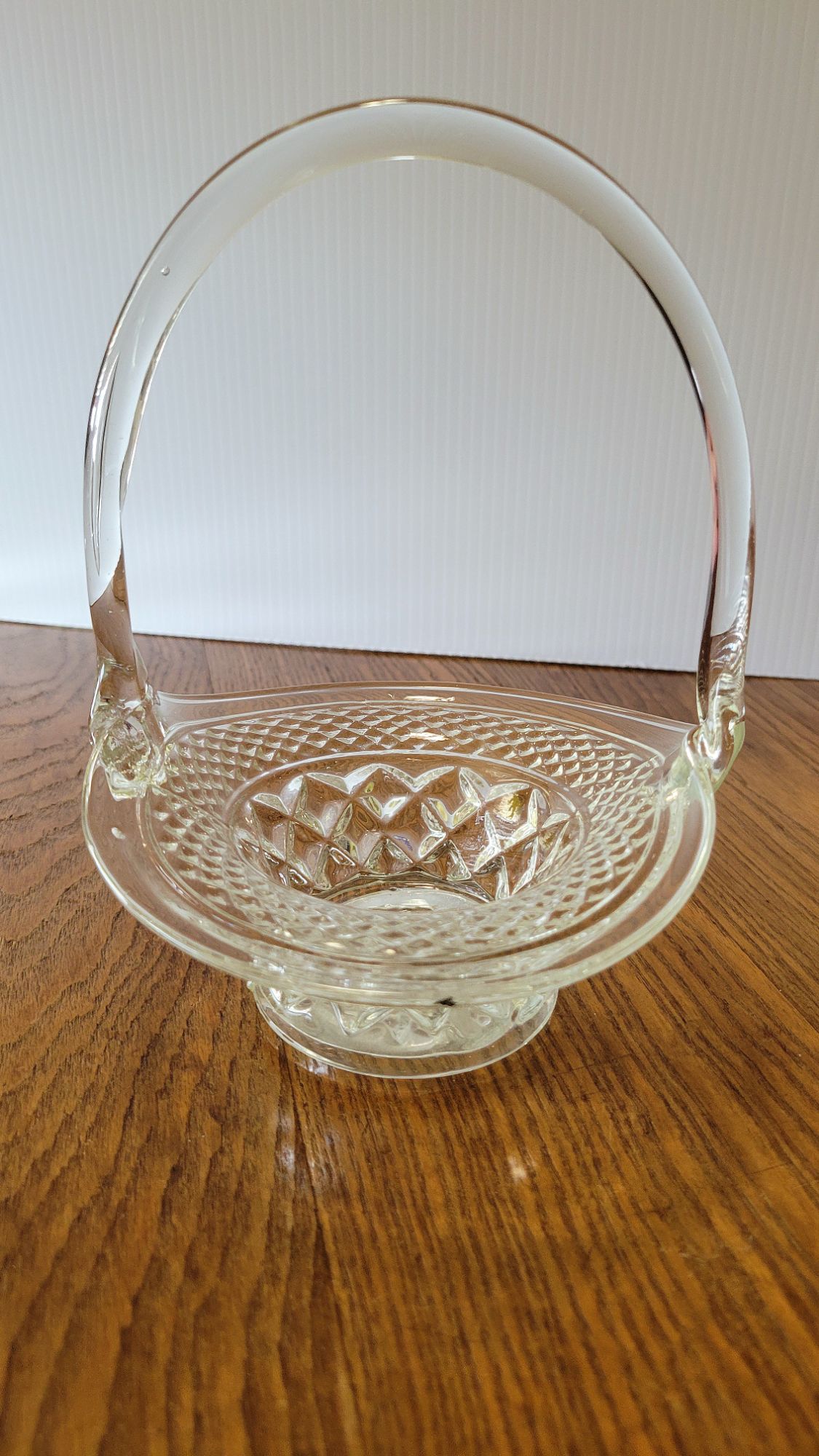
Originally I wasn’t going to bid. I didn’t know who made it; I already have a fair amount of Wexford lookalikes. It is oddly made.
But…
I have over 1200 pieces of Wexford. I have nearly every clear glass piece that I know they made in the pattern line. I wanted to see it up close, to touch it, handle it, see the pattern counts, compare it to every other piece to discern where it came from.
More about the basket:
When I first saw photos, I thought maybe it was formed by slumping a luncheon plate into a form and then attaching the handle. The luncheon plate is the only plate with a smooth ridge; the rest are scalloped.
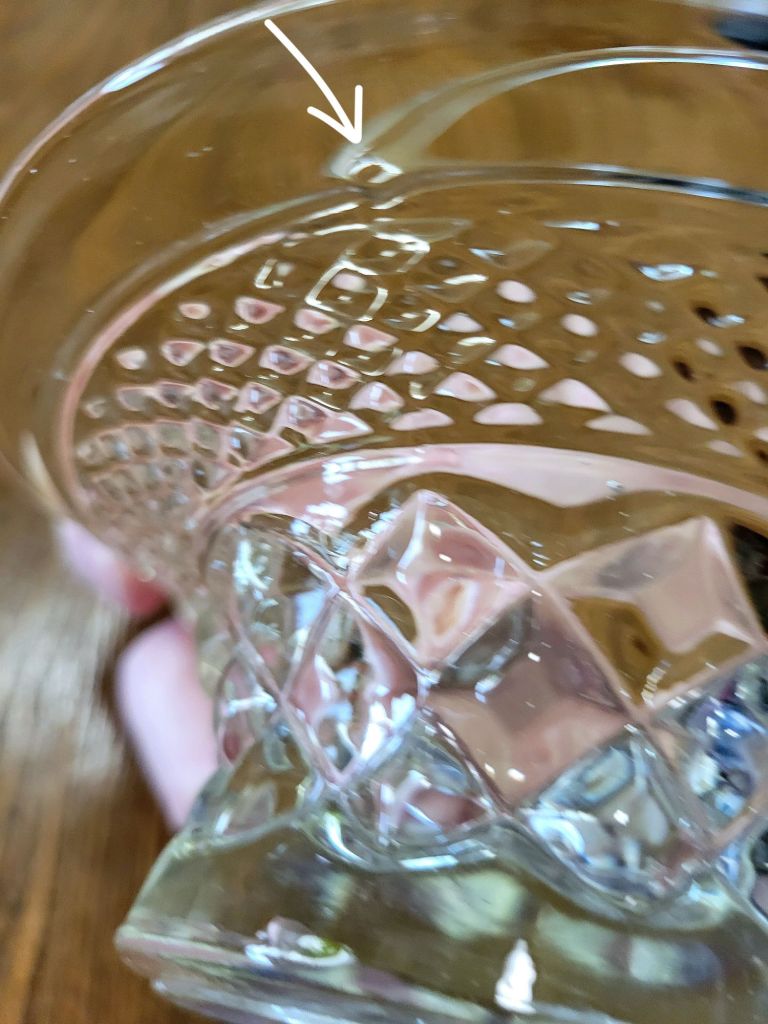
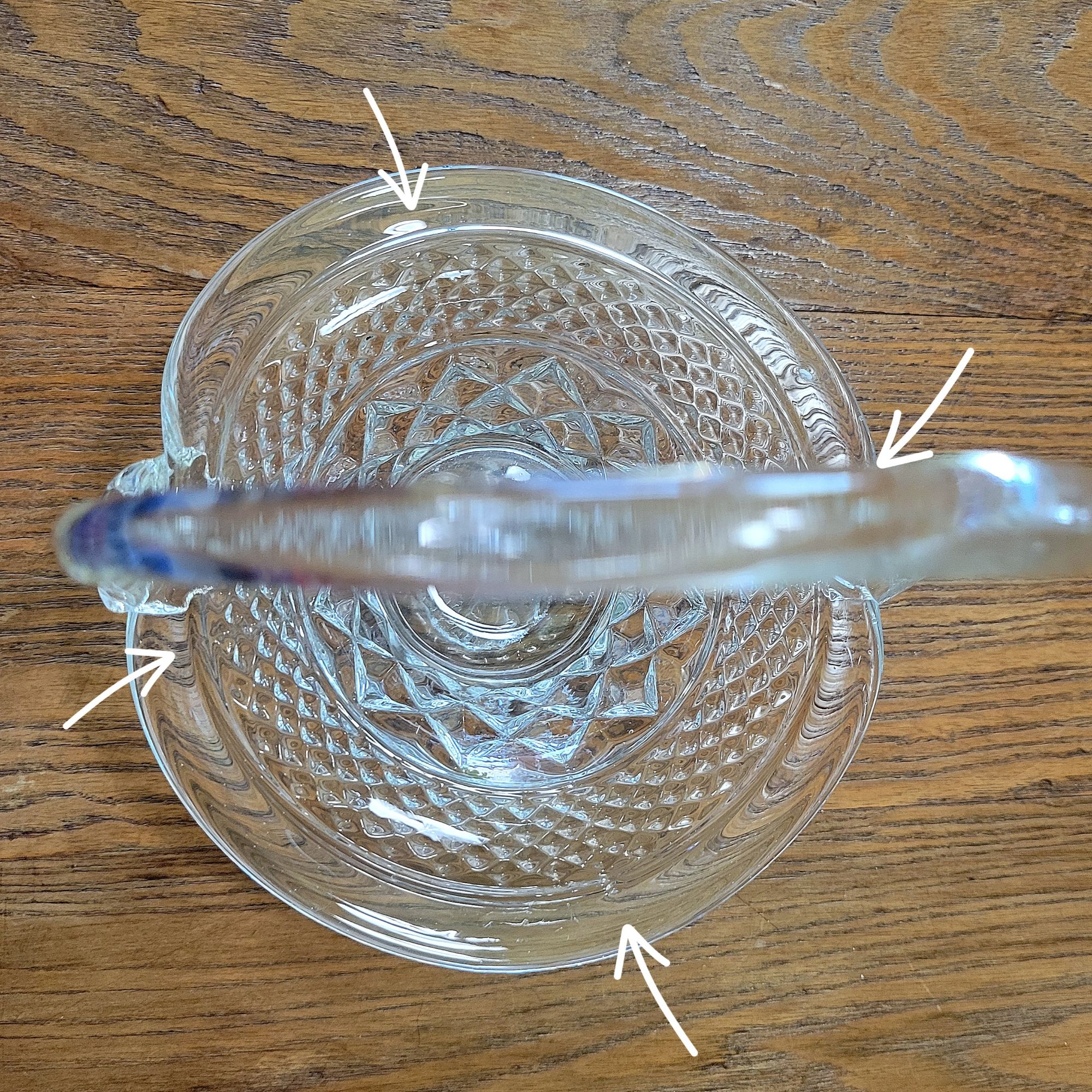
Also, it’s fair to say that the mold seams would be gone and the pattern on the base more obliterated if it was slumped after molding another regular piece.
Below, the four seams of the base are indicated by arrows.
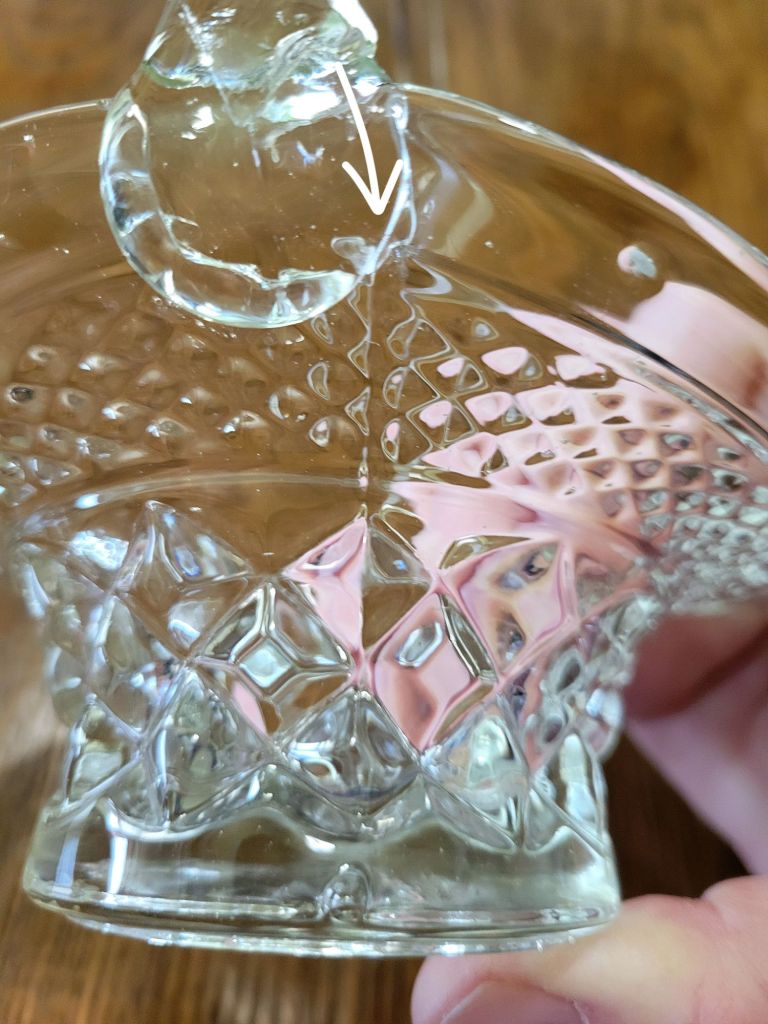
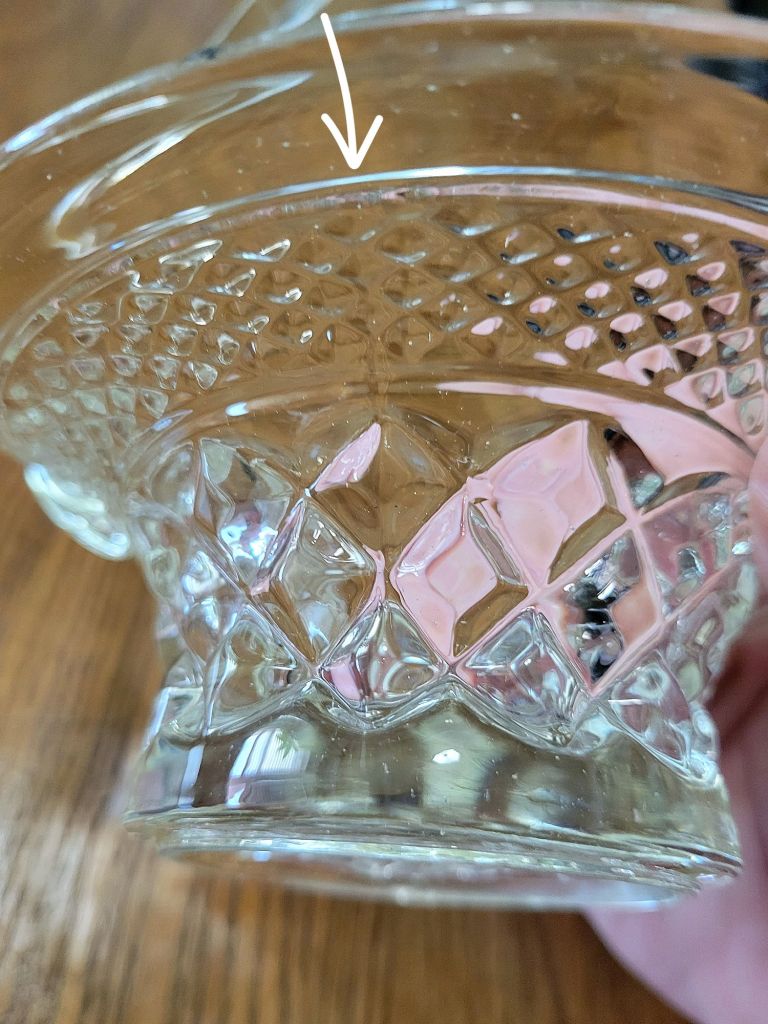
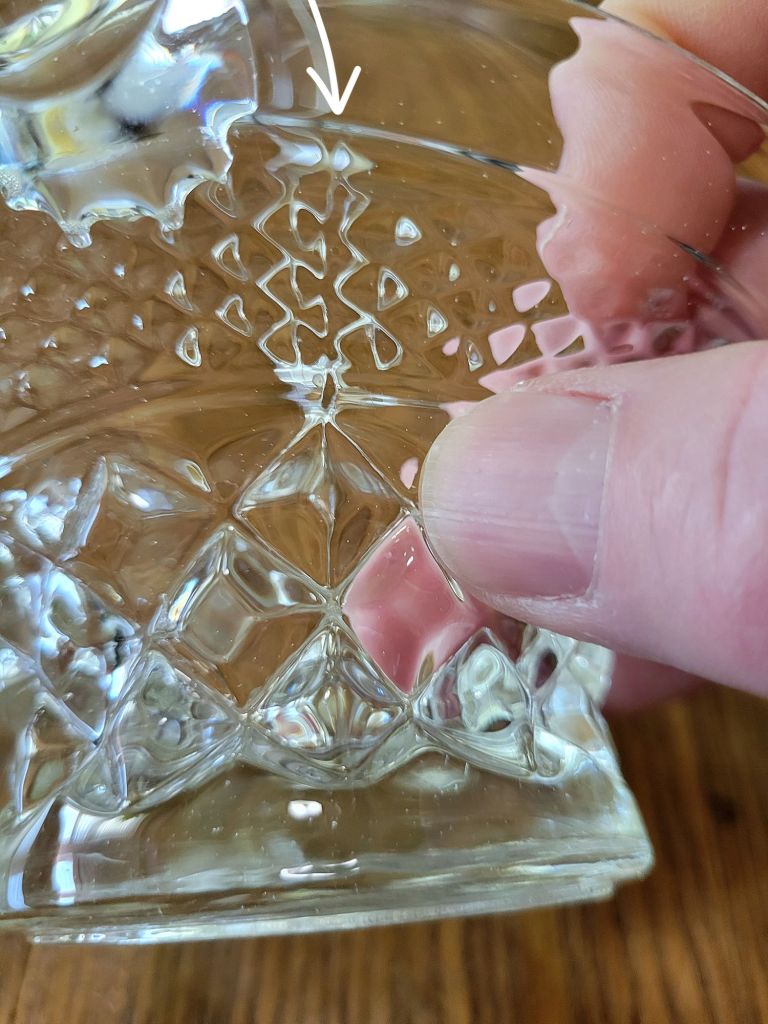
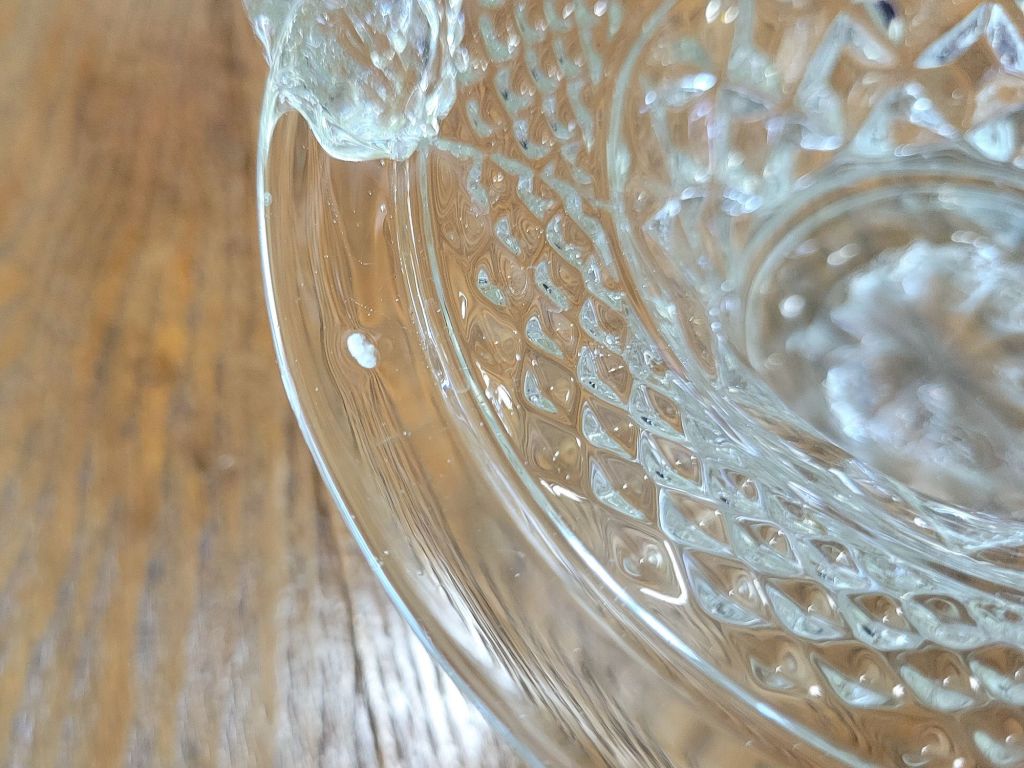
Additionally, what I first thought to be distortion on the basket bottom from slumping can clearly be seen now as a break-off mark from when it was removed from a punty (a glassblowing tool).
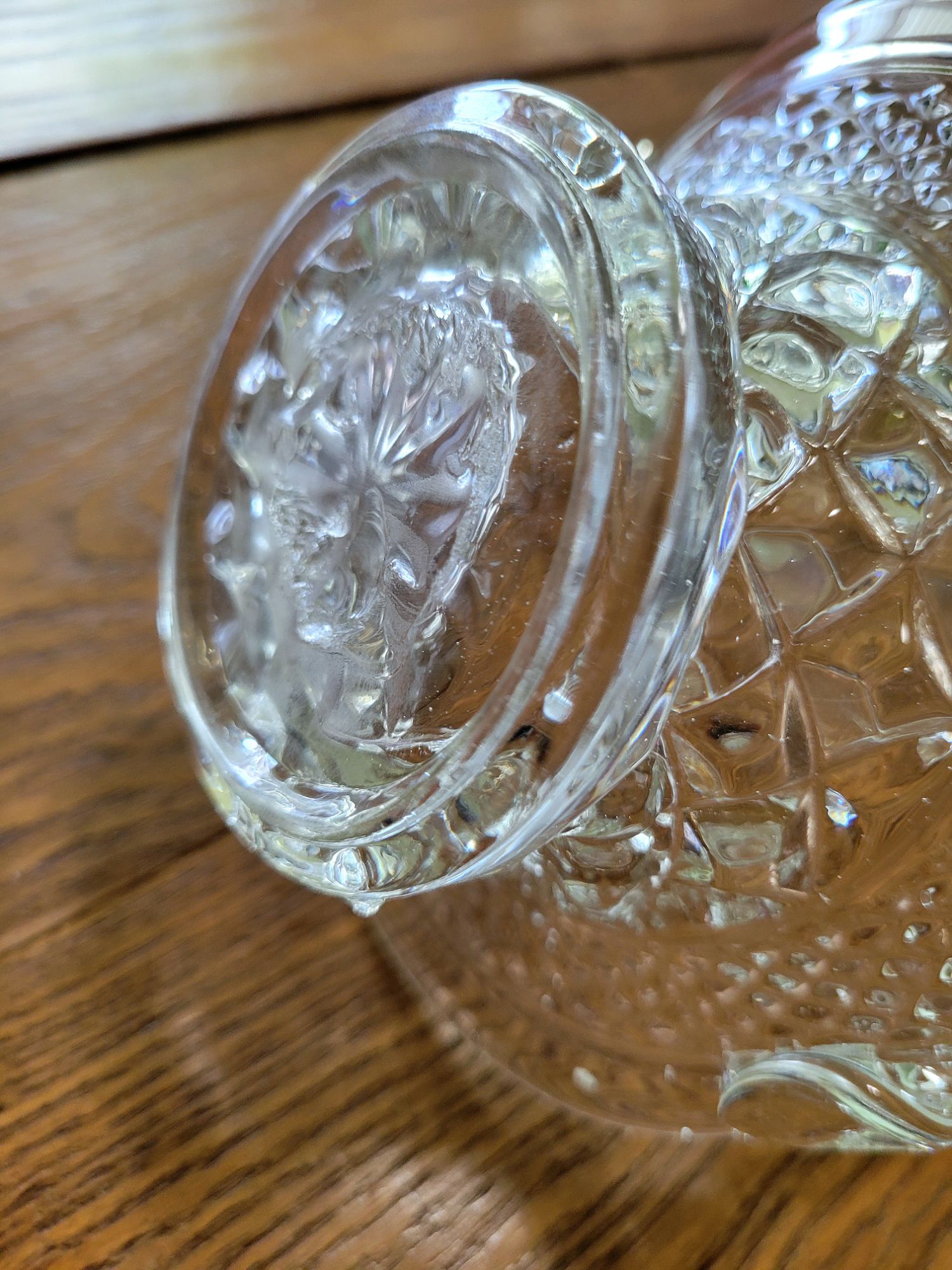
So it isn’t slumped, then what is it…?
The base is clearly molded and then altered, at least by adding the handle, through glassblowing techniques, but what did the mold look like?
Was it made as a basket, shaped like a brimmed hat? Or was it molded more like a on-the-rocks tumbler?
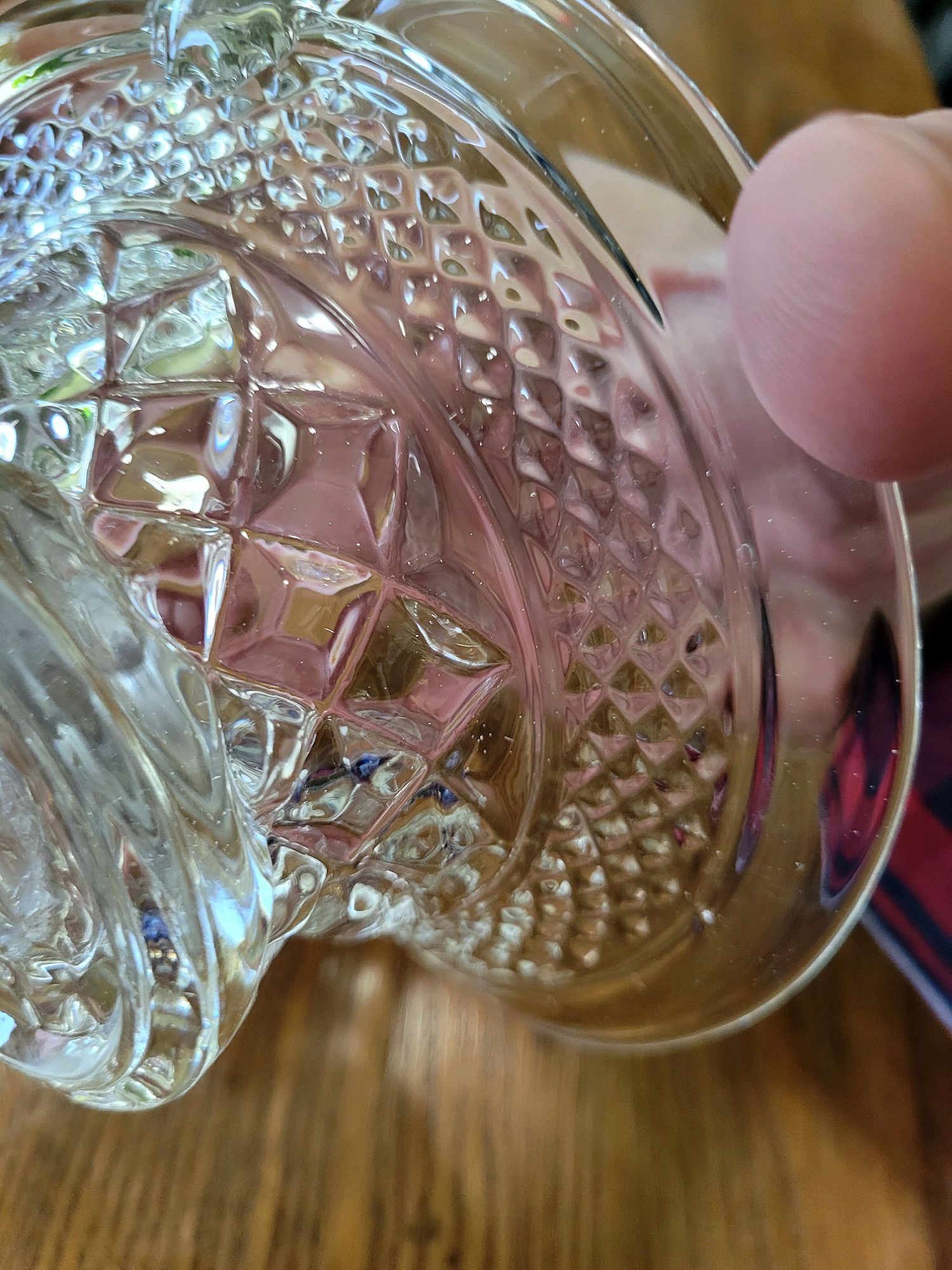
The softened edges of the bevels and the flattened top surface, of the large diamonds, are both highly representative of that design element on authentic Wexford pieces. The small diamond band closer to the lip is softened in its molded detail from authentic Wexford.
The bottom edge is similar to Wexford glasses, with a thin, raised ridge nearest the daisy, and a wide, flat band on the outer perimeter.
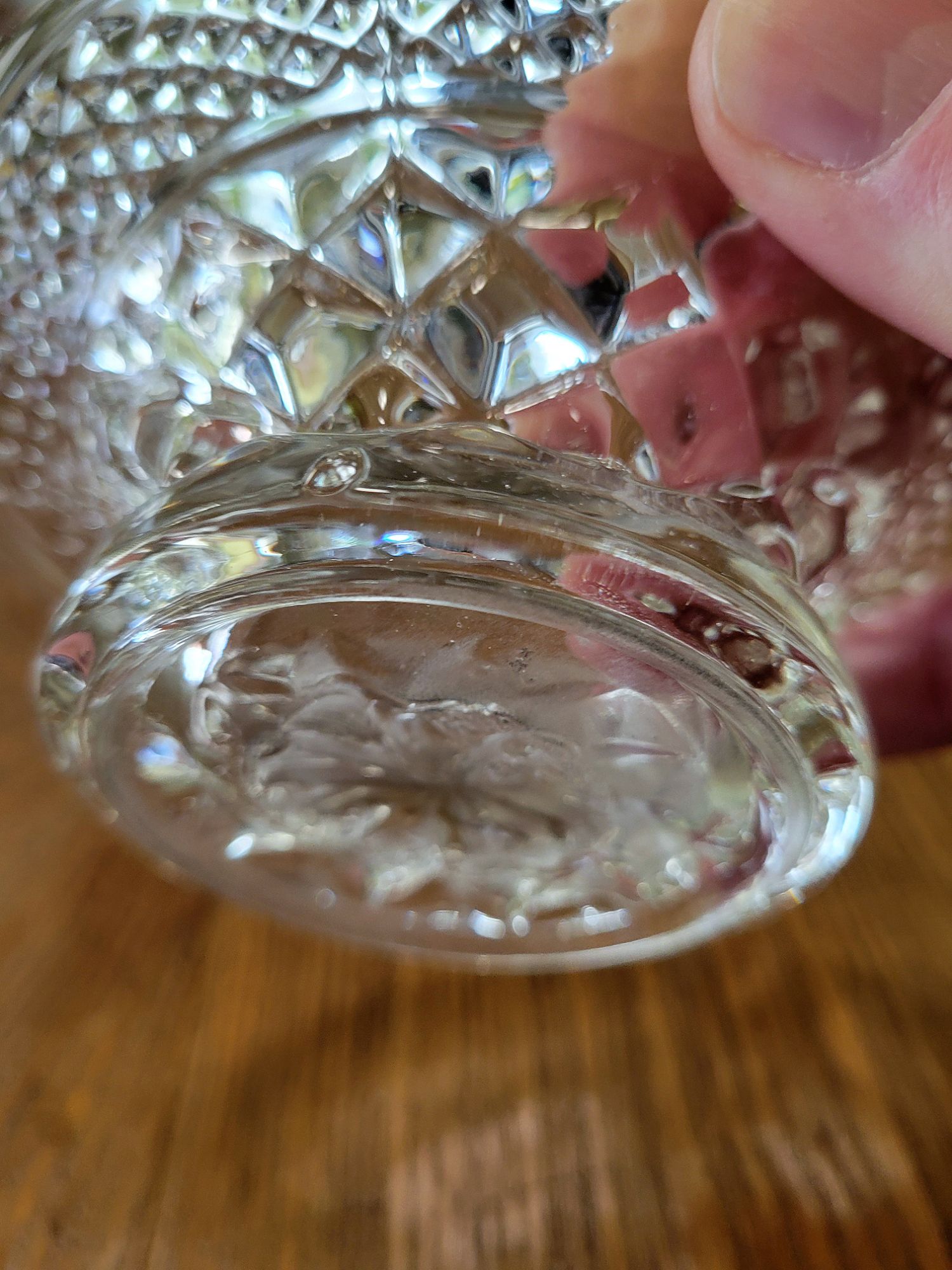
Does this indicate it started as a tumbler?
Maybe…?
It might have started looking like a rocks glass, then being opened by jacks (tongs used to shape glass vessels) while on a punty.
Except…
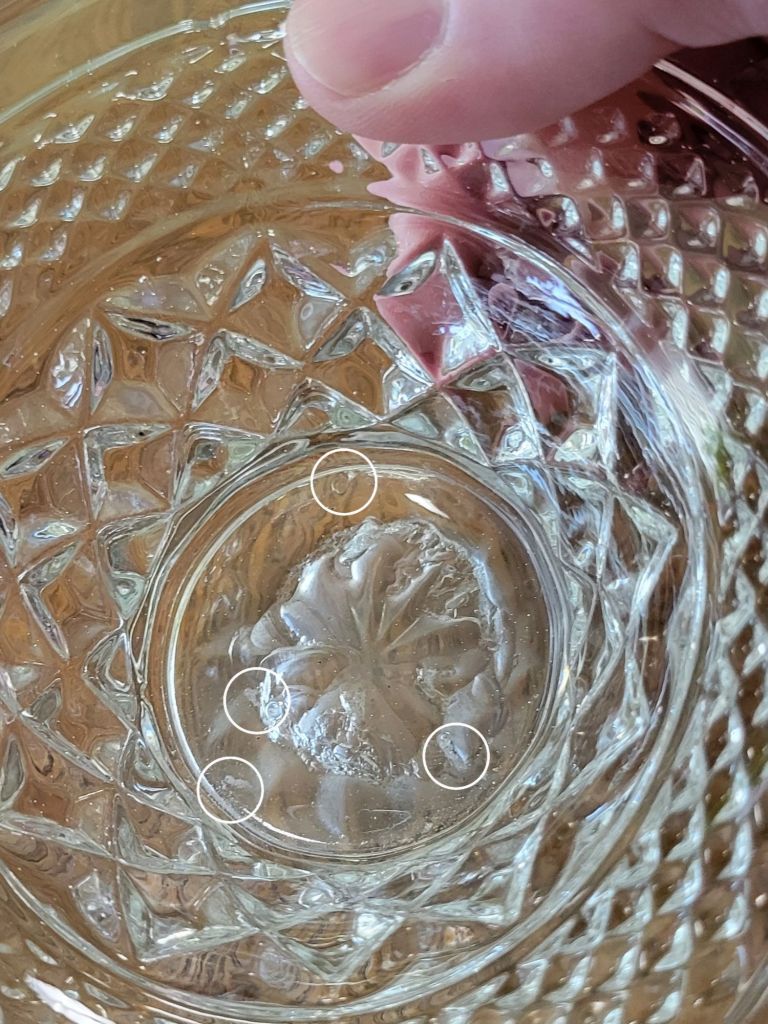
This would have had to have its own custom mold. The bottom is the same size as a Wexford double-rocks, but the daisy only has twelve petals. The double rocks daisy has fourteen petals. The basket has a vertical three count in the small diamond band, which matches the double rocks, but only has a vertical two count of large diamonds. Both Wexford rocks glasses have a vertical two-and-a-half count.
And finally…
Who made the thing?
Was this produced by Anchor Hocking glassmakers? Were glassblowing techniques commonly used by them?
I mean, certain Wexford pieces needed to be blown into a mold instead of using a full mold, right? The canister set, the cookie jar/ice bucket, the decanters. Each of these has a neck smaller than the vessel and uneven glass flow inside at the bases.
If the finishing was done by Anchor Hocking, I think it would be part of building a prototype or someone playing around at the end of the day.
Either way, there’s a surprising amount of slop in how it was made.
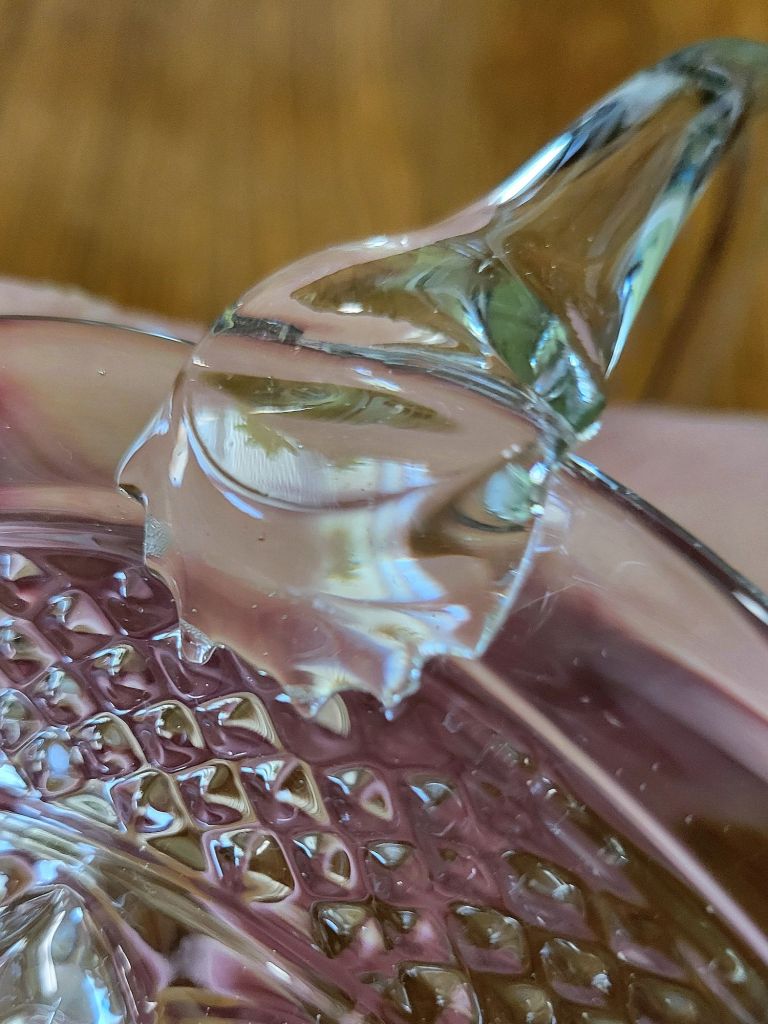
The handle is unevenly pulled when attached. It appears that the handle was stretched to length after the first end was joined, both stretching the lead end thinner than the other side and pulling the attached end off of position.
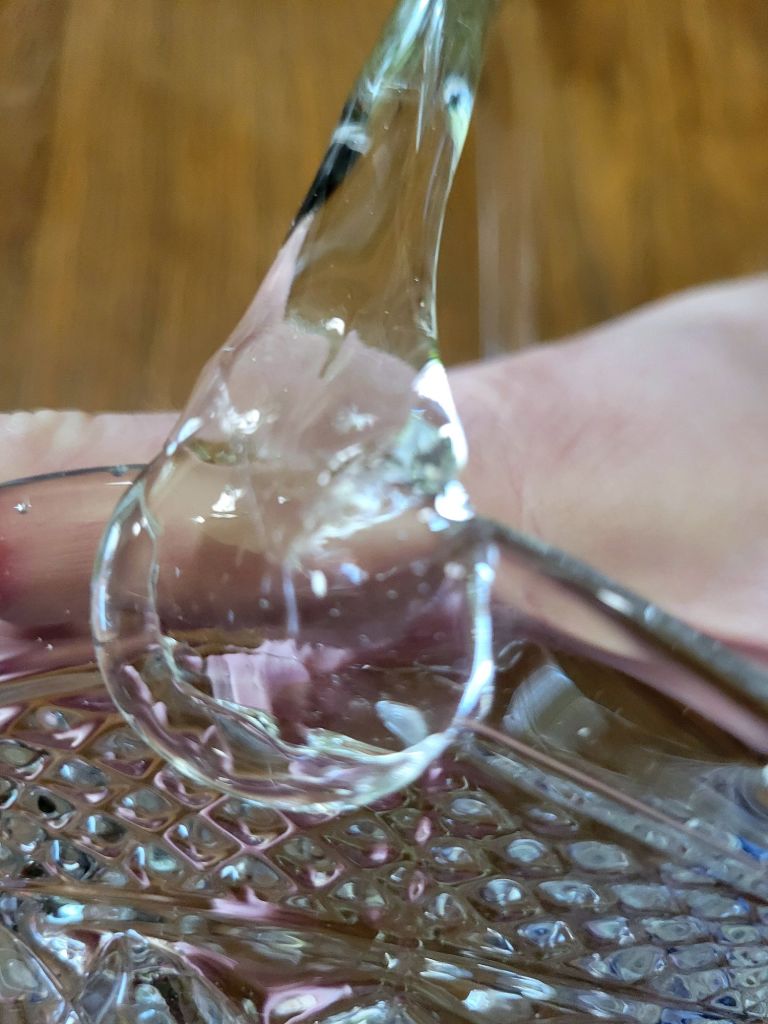
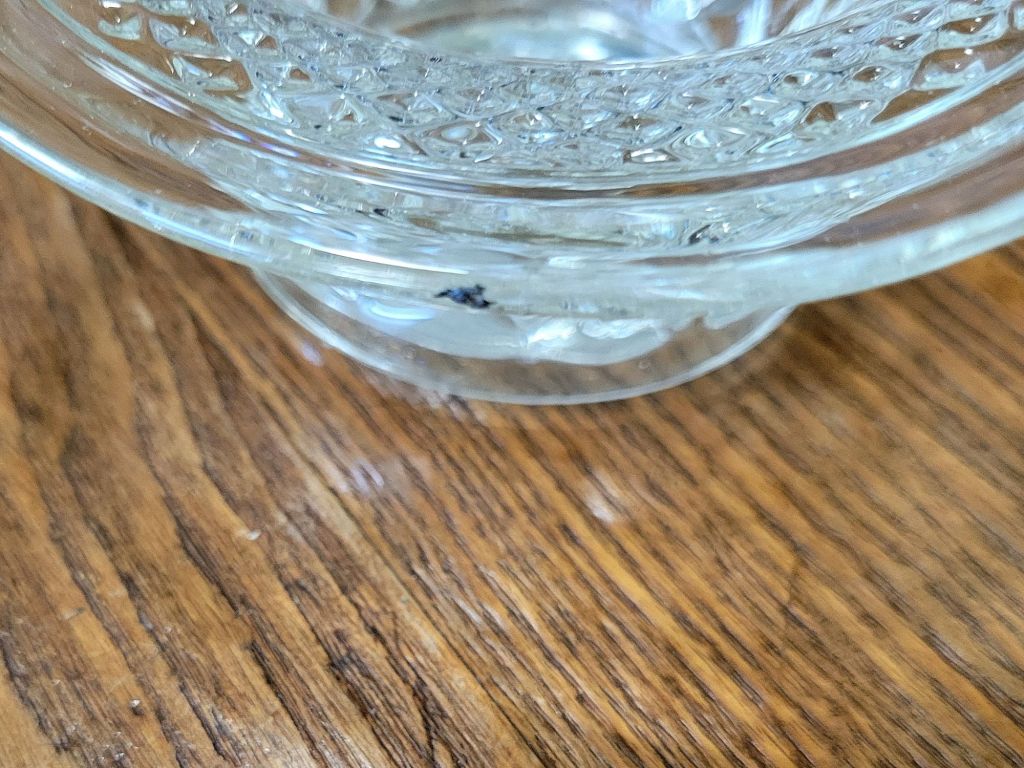
Also, there are numerous inclusions in the glass, and the bottom of the base is noticeably thicker than any Wexford glasses.
If this is an Anchor Hocking prototype, there would have been blueprints as specs for the base mold. I am not sure of how to confirm its existence.
If it was made by an independent glass artist, where did the base piece come from? And wouldn’t the reheating and manipulation of the base be significantly more difficult?
Either way, Wexford or imposter, I am happy to add this odd, little basket to my collection.

 wexford: a study