At this point in my Wexford collecting, I am alway exciting to find something new. Or something unknown. Or something unknown except for that one time I find only one sort of like this. Maybe.
The thing is: experiments happened. Unofficial colors happened. Hobbyists experimented, with paint, or stain, or gel enamel. Or, maybe, hard water stained the glass over years of washing and use. Maybe.
This past week, I found, bought, and received seven Wexford beverage tumblers by Anchor Hocking:
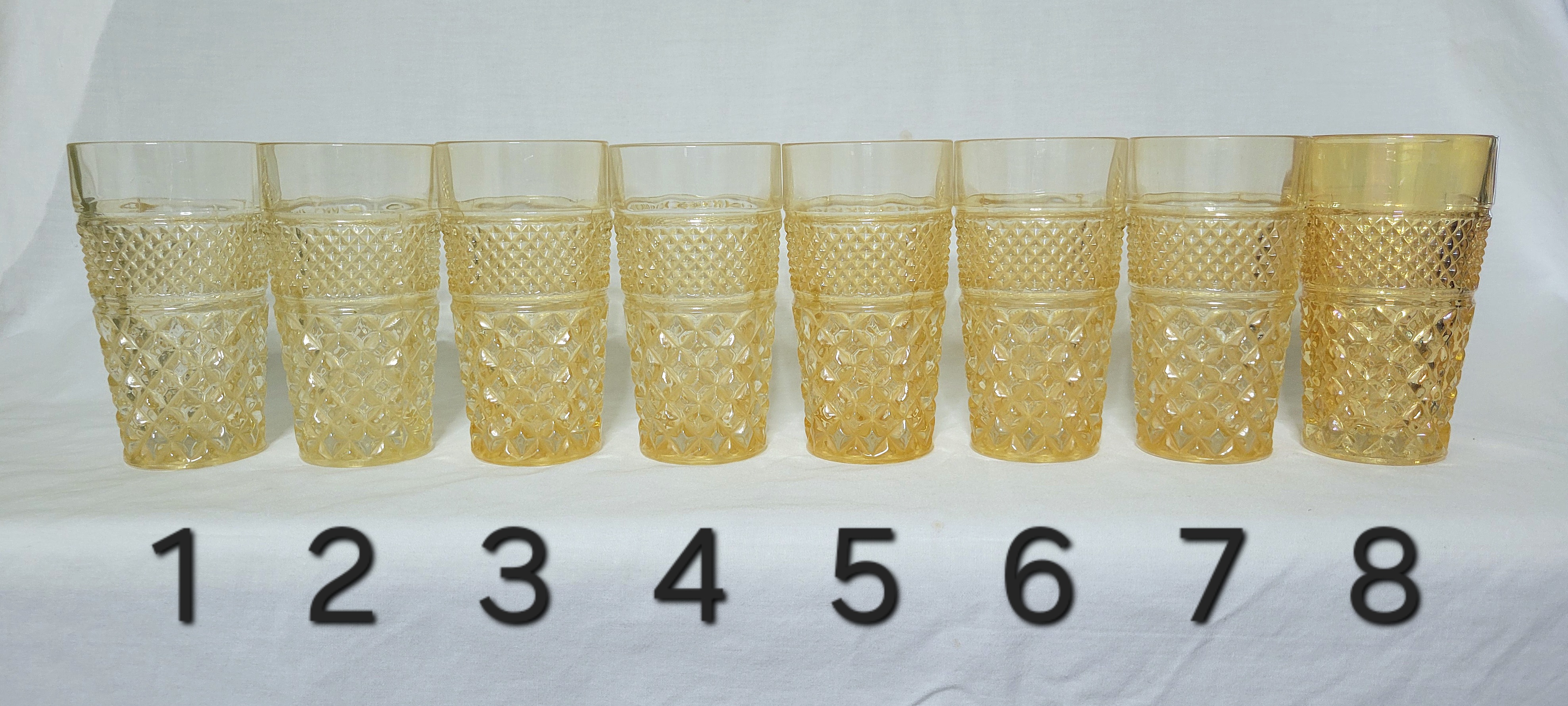
Please note: glass #8 I bought back in last July. I thought I was getting seven more of the same, but if I did then the seven new ones are greatly damaged. #8 has solid rich color. It is wholly iridescent, like Pewter Mist Wexford is mant to be wholly iridescent. The new set has no noticeable iridescence. Just amber tint.
And grime.
Glass #8, up close:
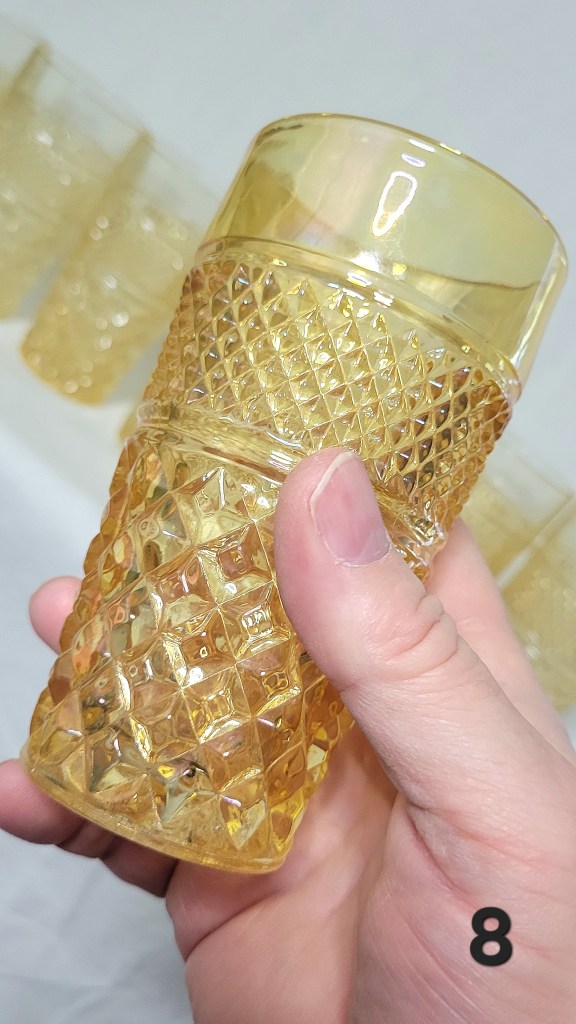
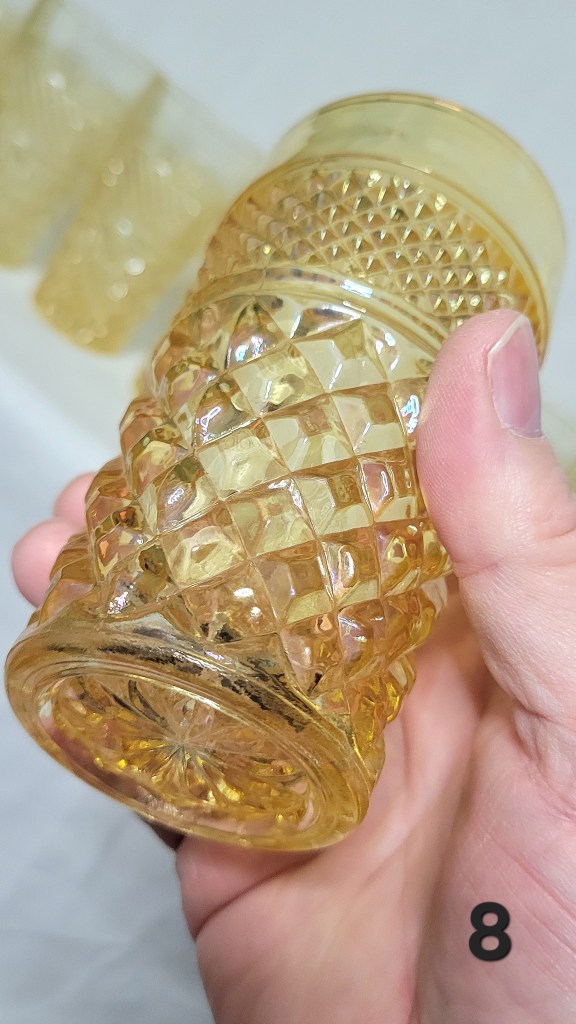
I have difficulty capturing iridescence in photos, but the clarity of the glass and depth of color is obvious.
The seven new glasses have a film built up in the grooves of the glass pattern. Or did. Os some still do. I did some experiments. I washed them all with Dawn dishsoap and a non-abrasive sponge. This is what I got out of it:
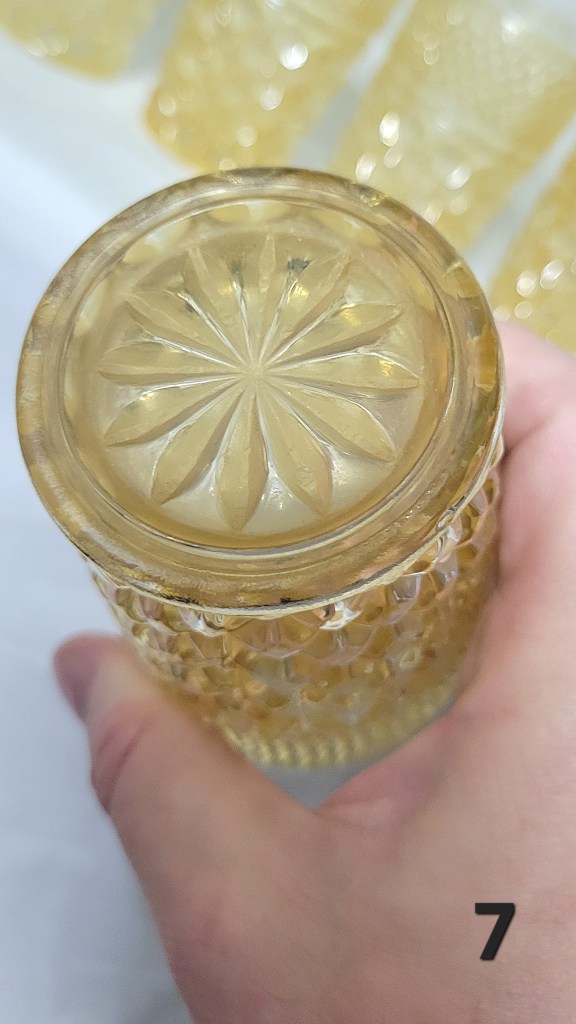
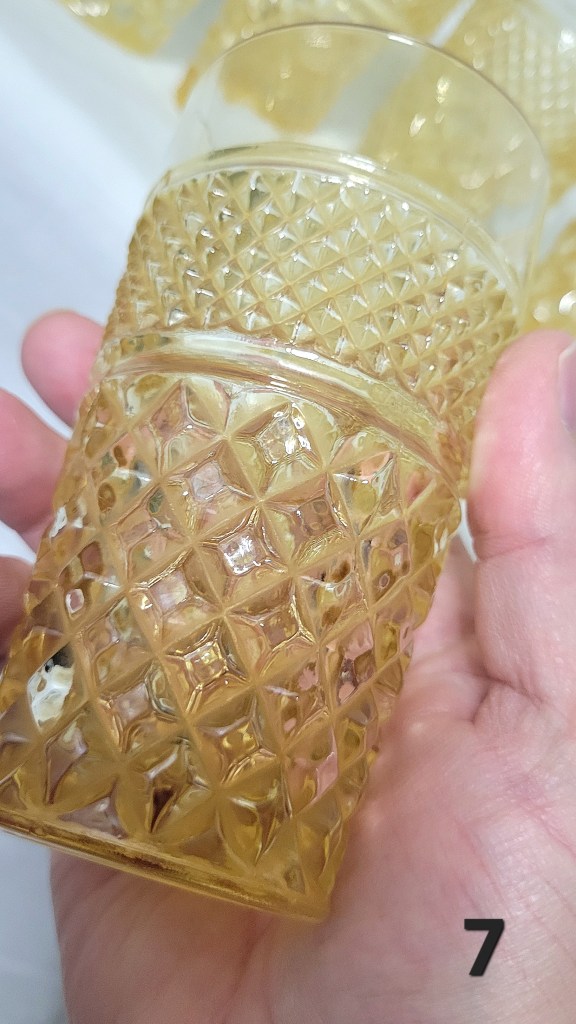
The etching/film on the bottom of the glass is still obvious, and although it is hard to photograph, the dull film in the diamond pattern is, too, but the outer surface is giving some shine.
The film was still rather apparent, so I went deeper, cleaning most of them with Dawn and a soft toothbrush, focusing mostly in the grooves, trying to give them a shiny presentation. I used lots of Dawn and lots of elbow grease. This is what I got:
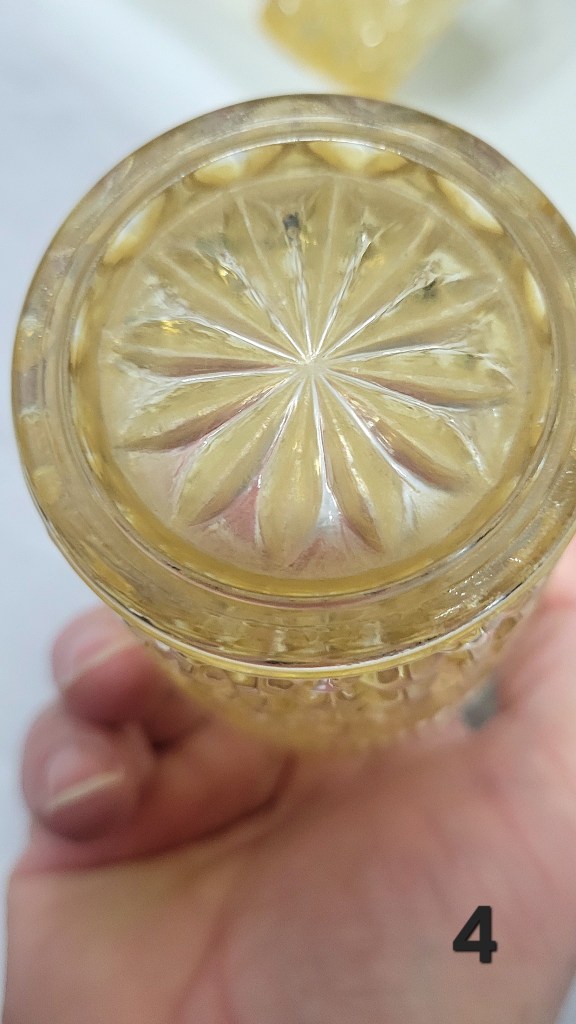
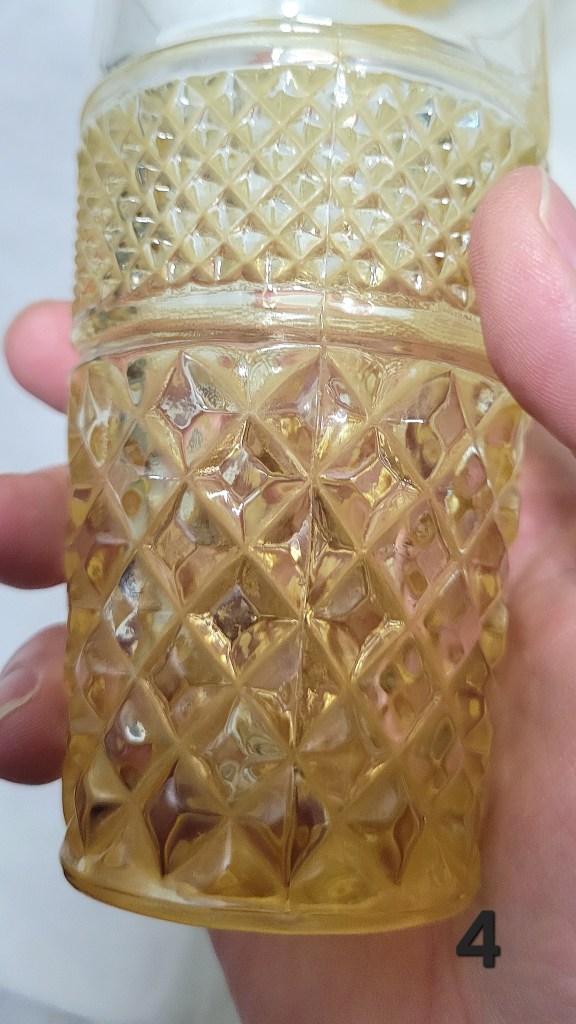
While the inset petals of the daisy on the bottom is still as dull as in glass #7, there is some more shine peaking through the outer surfacce of the bottom. There is also more light bounce in the recesses of the diamond patterns on the sides of the glass.
I went even more agressive on one glass, using CLR and a soft sponge. When I rinsed, the glass appeared significantly paler than the others. I only panicked a little bit. The film definitely was removed but so was some of the color. And this is what I got from this:
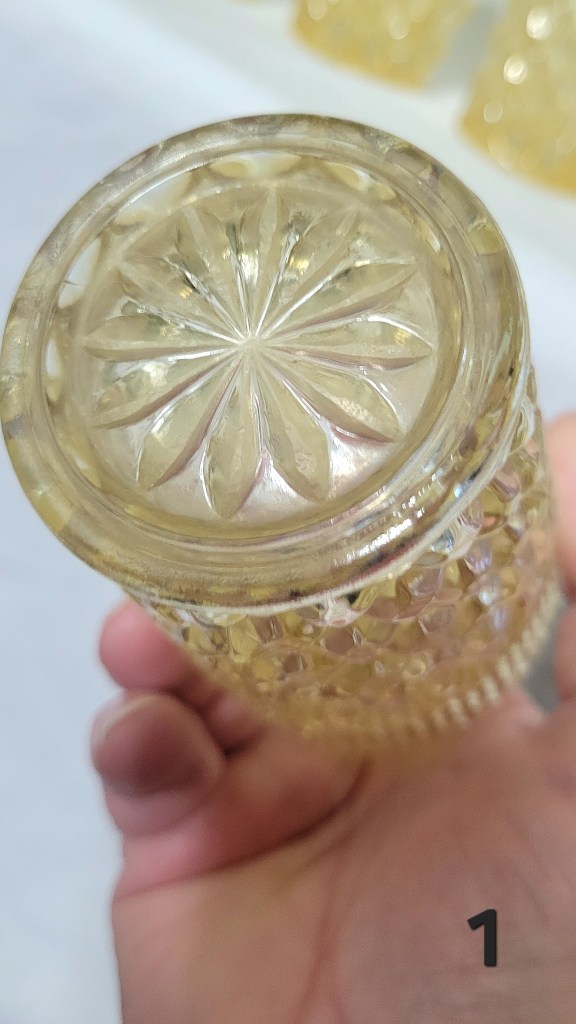
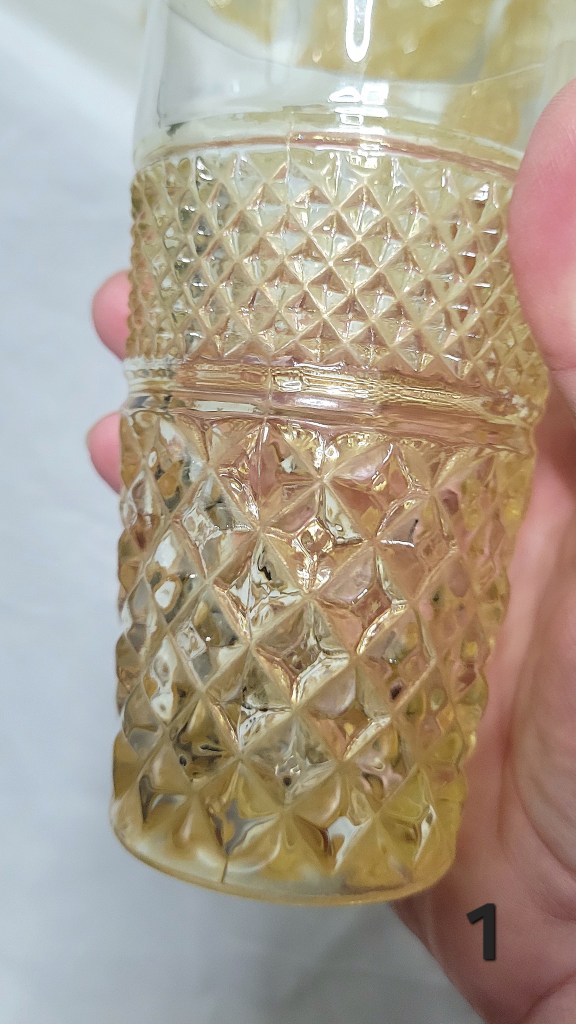
The bottom is both paler and brighter, shinier, on the base surface and in the petals, and the diamond grids on the sides are bright and clear. The smooth rim almost looks colorless.
So, let’s rearrange the line-up fromt he top of this post, minus the eighth glass from a previous purchase:
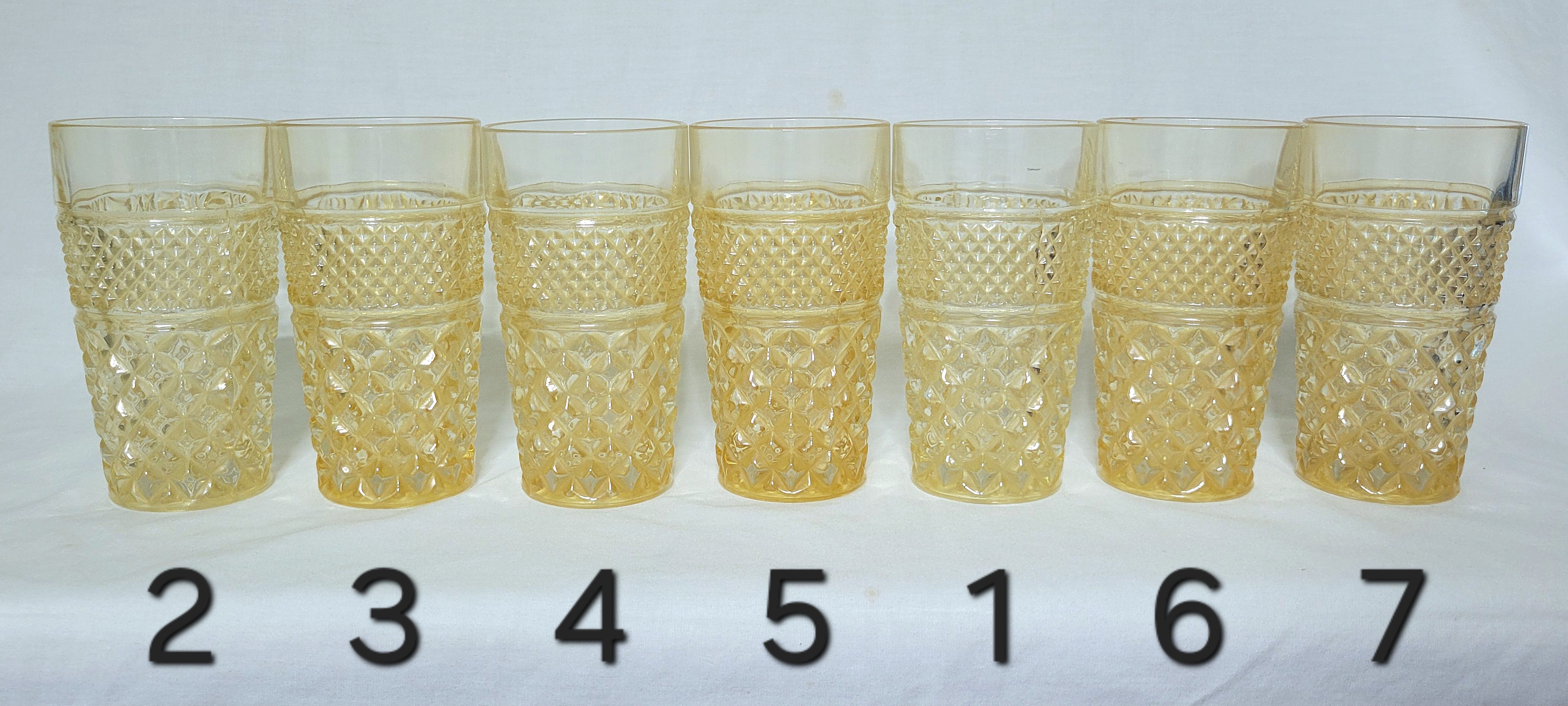
Changing the order illustrates the color lose from the CLR application. To me, this suggests at least something of this amber color is due to mineral staining. I do not know if this would qualify as water ambering, or even a close cousin to it.
Looking at this rearranged line-up, I can let go of my panic and acknowledge that the color loss was no as severe as I previously thought. Plus, glass #1 definitely shines more than the rest of the lot. I may sit on this a bit, read up about water-ambering, and eventually return to the bunch and keep working on the film.
I don’t necessarily feel closer to understanding what I have here, but I definitely have more Wexford pieces in a broader range of color. And that, I will take!


