Recently in the FB Wexford group, there was a question posed about pouring wax into Wexford pieces and if there would be issues with the glass holding and burning a candle. The overall concensus was “No! Wax bad!” and while I don’t wholly disagree with any of the anecdotal evidence offered, I do feel like specific impacting conditions weren’t addressed by name, and I think some of these factors can mitigate the biggest concerns against burning candles in vintage glass.
Before I get into the specifics, I want to mention that Anchor Hocking or third party companies, namely Revlon and Fuller Brush Company, sold Wexford as candleholders.
First, Anchor Hocking sold the Wexford candy bowl (without the lid) as Nightlighters/Candlefloats. The product came with a float and wicks. Water and then cooking oil were added to the dish, then the float with the wick. Lighting the wick allowed it to burn the cooking oil as the float stayed suspended in the bowl.
Anyone in the FB group can search the posts for ‘Nightlighters’ and they will see two posts by the group’s creator. Online searches did not yield any images of the product to share here.
Second, Anchor Hocking finished the single rocks glass with a brass band and handle and sold them to Revlon to sell as poured candles. I have one of these without the candle, so I can share this directly in photos:
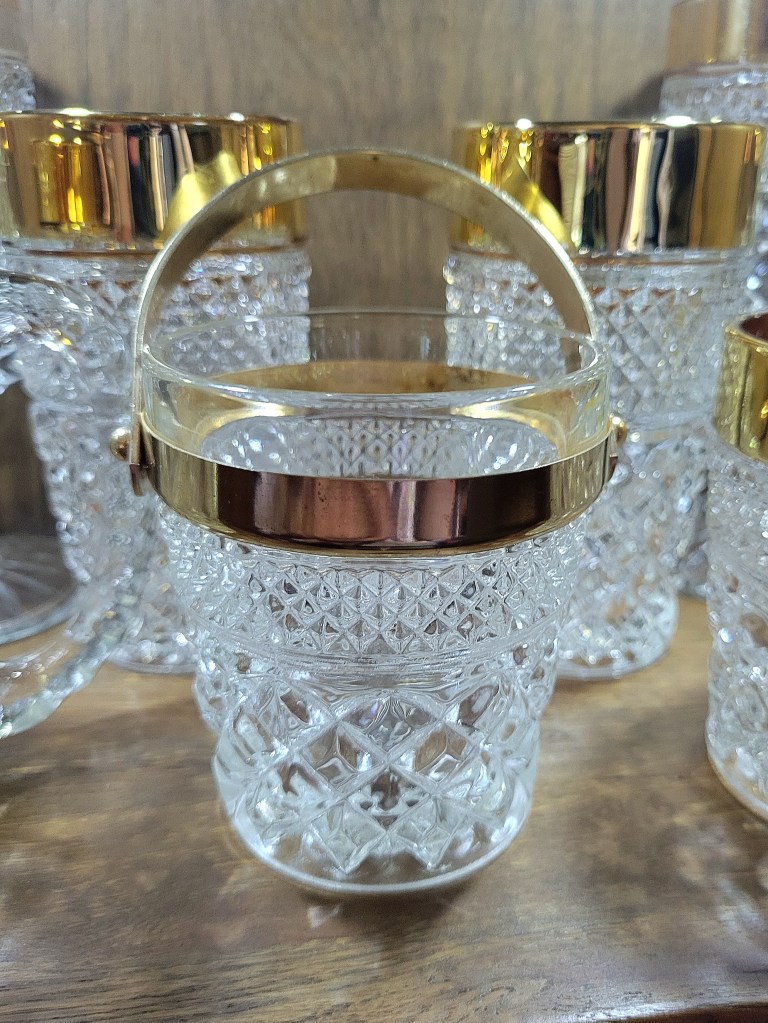
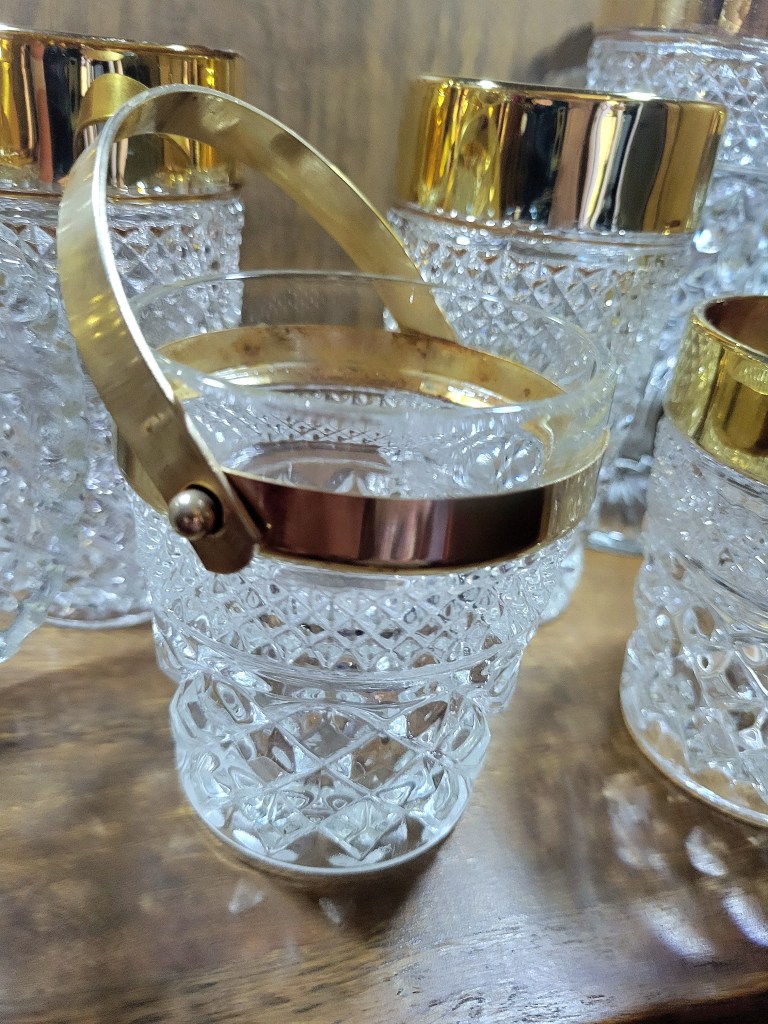
sold to Revlon who sold it as a scented poured bucket.
The piece above is most often listed online as a sugar pail, the idea that it was for sugar cubes, whereas the sugar bowl with lid was for loose table sugar. But this has been confirmed as a third-party candle holder sold by Revlon. Group members can search posts for ‘Revlon poured candle’ to see more information from members who have pieces still with a candle in them. One is Revlon, and one carries a label from Zimco, Inc. with an address of 10 Sheridan Street Pittsburgh PA 15209, although this company now yields results as some sort of personnel/resource company.
Third, the Fuller Brush Company sold AH Wexford sugar and creamer sets with a poured candle in the sugar bowl. I have very little information about this one other than knowing that it exists. I have seen photos of the set but do not have them to share.
Fourth, candle bowls that may or may not have been made by AH after they bought out Brockway Glass Co. The bowls sold by Colony Candle Company as per a group post found under a search for ‘candle bowls’. I remember these from my serving days through college, but contrary to the post, my memory is that they were poured candles, available in clear, ruby, and maybe amber. These bowls were also in a nugget-y pattern and I may be mixing different styles together in my head.
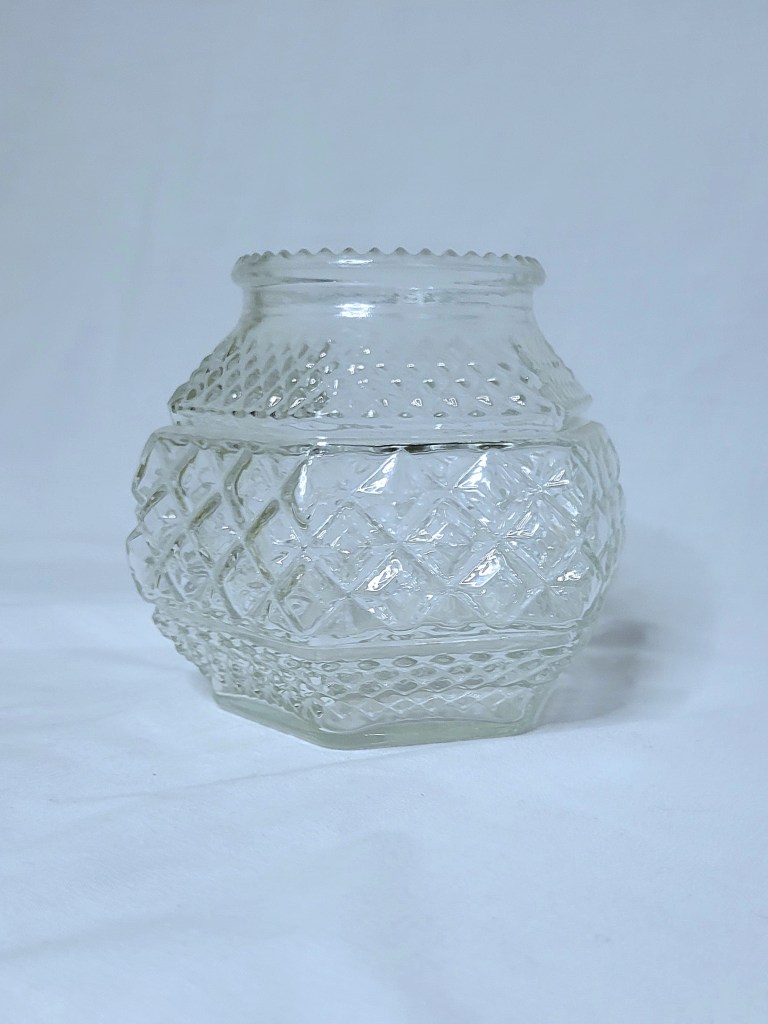
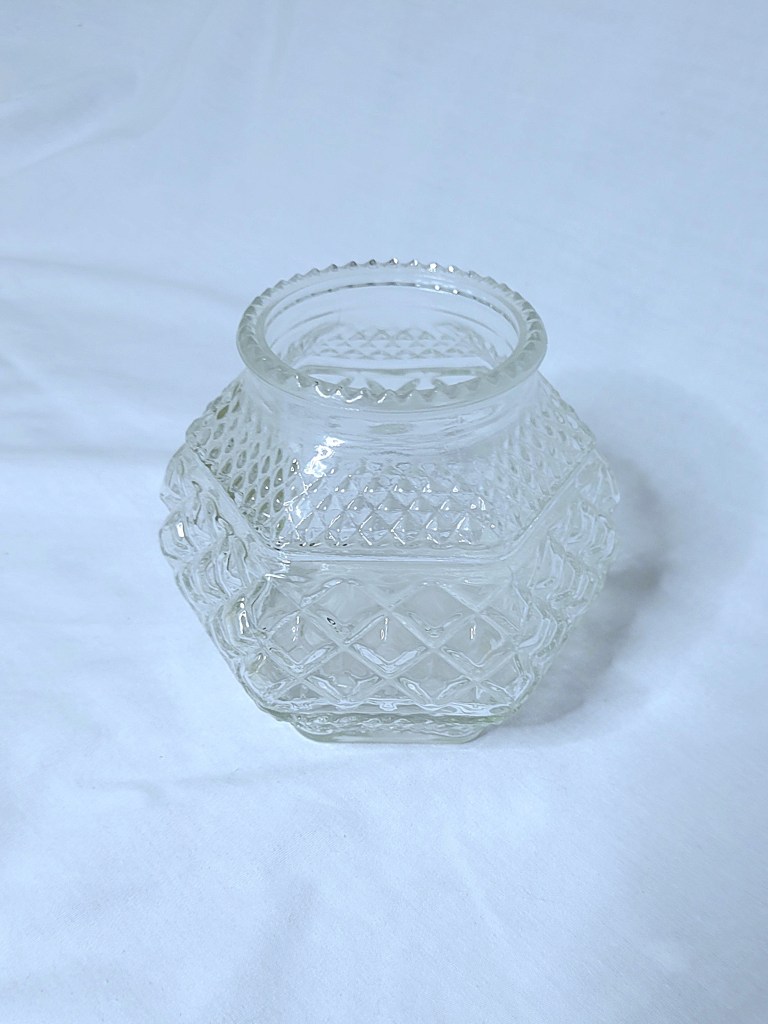
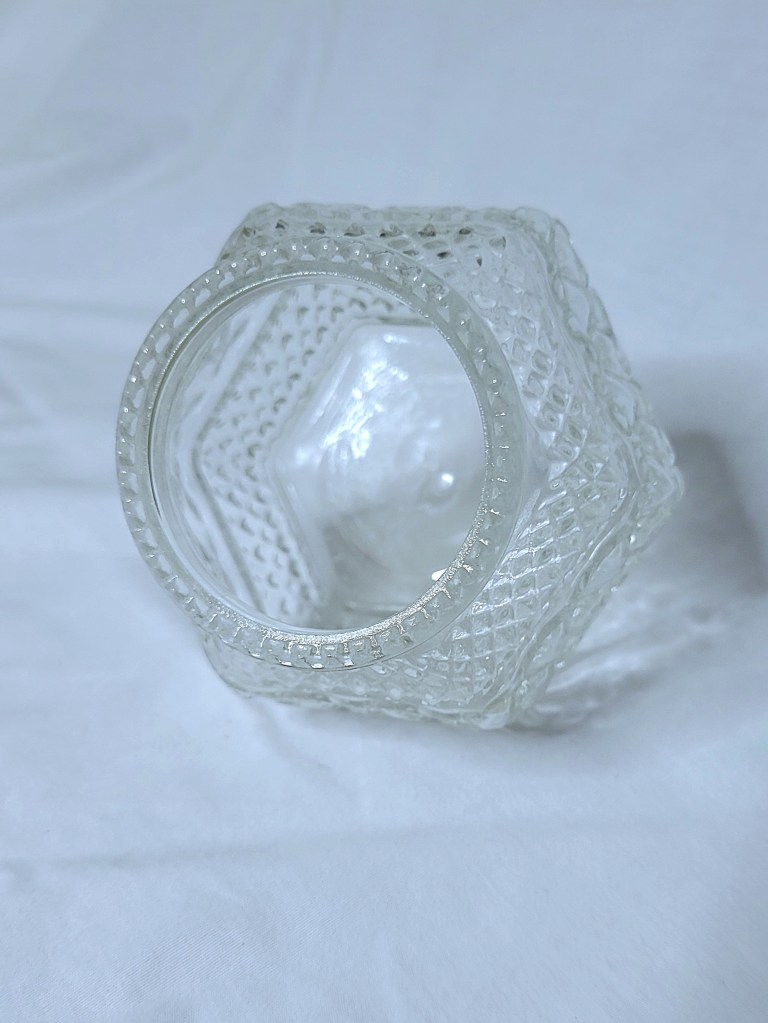
The other taller shape can be seen in the group history via the search parameter listed in the previous paragraph.
Fifth, and lastly, the AH Wexford candleholders. The votive holder, the scalloped candle bowl, and the bud vase/candleholder all qualify and, honestly, if votives or tapers were left to burn entirely down (more on that later) those pieces pose the same risks as any of them for cracking or exploding.
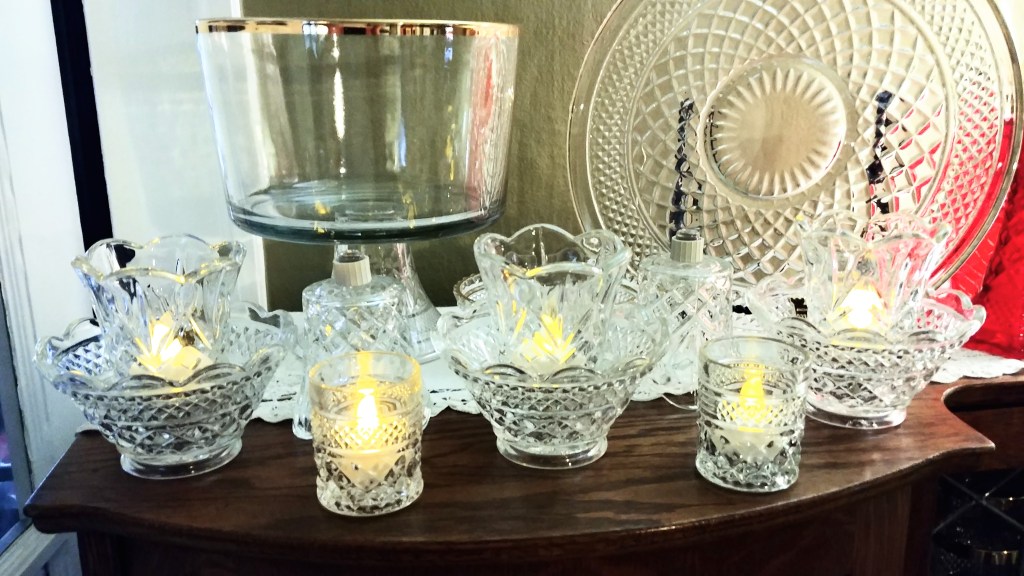
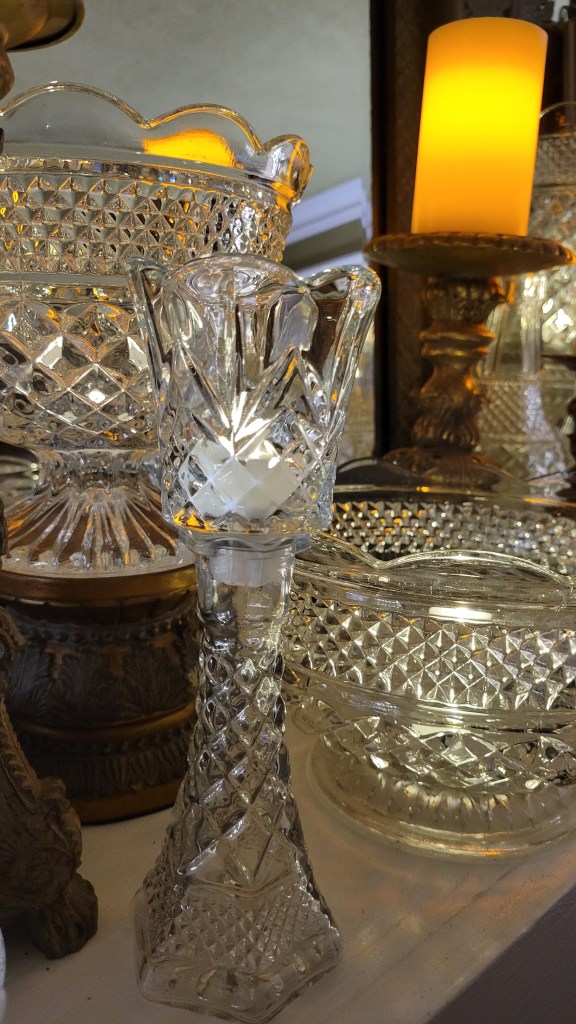
None of this even mentioned the oil lamp, which I would think would have the same concern for thermal shock.
Okay, part two! the conditions that influence the outcome of using glass vessels for poured candles: The core concern is thermal shock, but many factors can contribute to it.
First: Wax melting points. Soy wax is softer and is often used in poured candles because it has a lower melting point. Paraffin burns hottest, with the highest melting point. The link in this paragraph offers a comprehensive list of the more common wax types. Also worthy of note: additives and contaminants, like plastics, found in cheaper waxes can make the wax burn hotter, adding to the risk of thermal shock.
Other safety concerns: Burn times (generally either a 4 hour rule, or 1 hour per inch in daimeter), wick length (wicks should be trimmed to 1/4″ before lighting each time), a centered wick, burning to the bottom and so on. This article has some great information and there is plenty available via online searches.
Honestly, creating poured candles for selling seems wholly ill-advised. Without practice and education, it can lead to high-risk results in both the making process for the seller and the burning process for the buyer. There are many articles discussing The 84 Candle Rule, that states a person should make at least that many before selling candles to others. This clearly is not a beginner business; property and lives are on the line literally.
All of this said, no candle is free from risk, so I don’t understand why this specific topic of poured candles in vintage glass received so much heat. Do collectors burn tapers in their glass candlesticks? Or votive candles in glass votive holders? These carry the same amount and types of risks.
In the spirit of transparency, we don’t burn candles in our home. It turns 100 years old next year, and we would like to finish out our lives in it. We use LED lights exclusively, and I would like to offer some details about it:
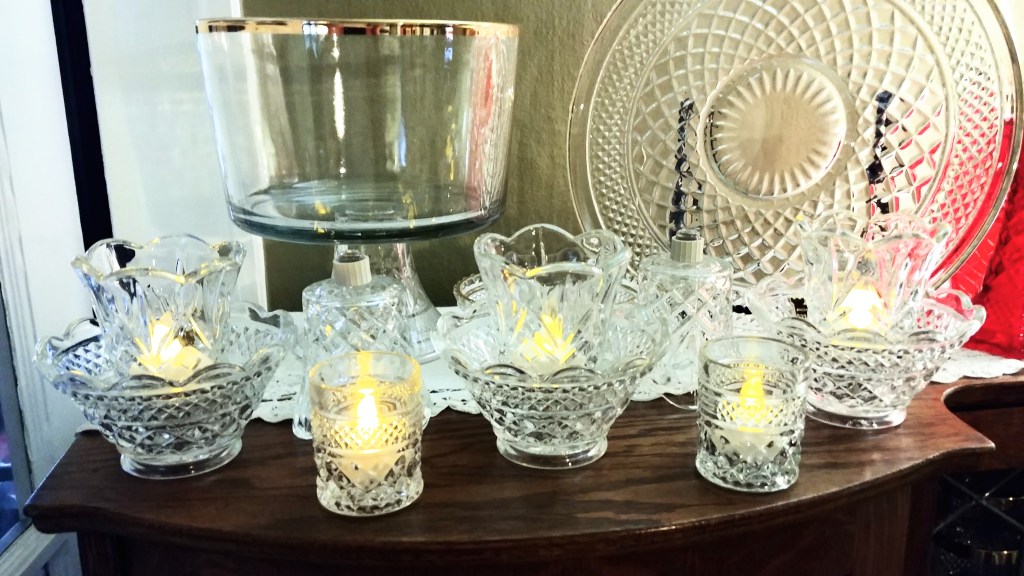
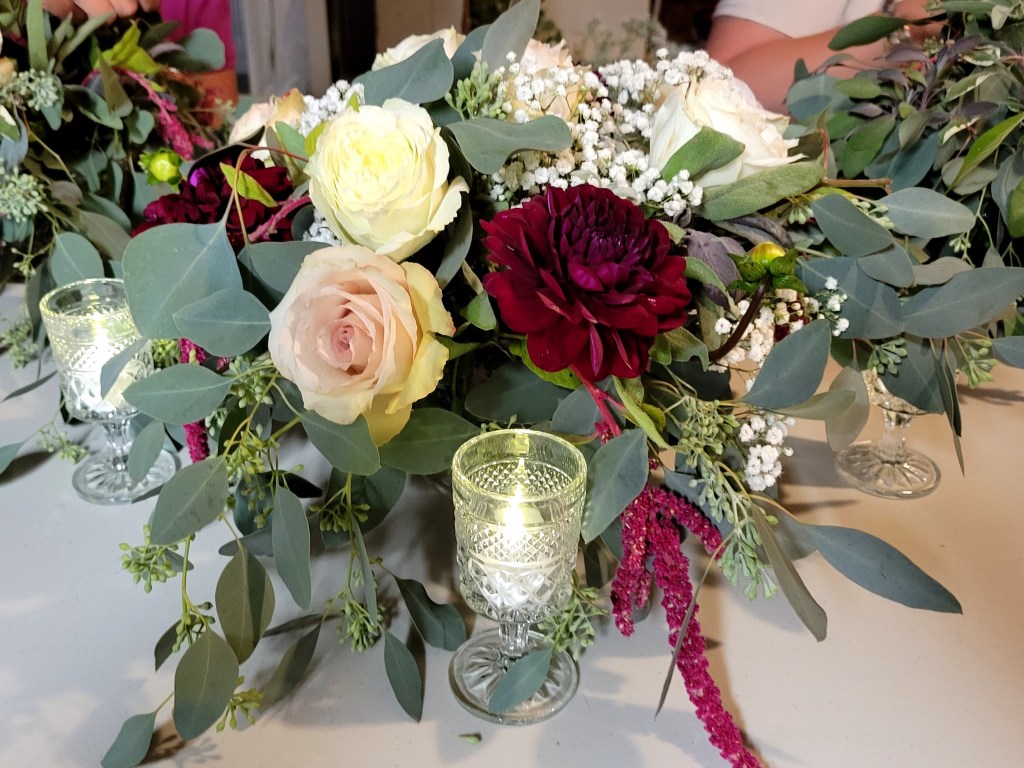
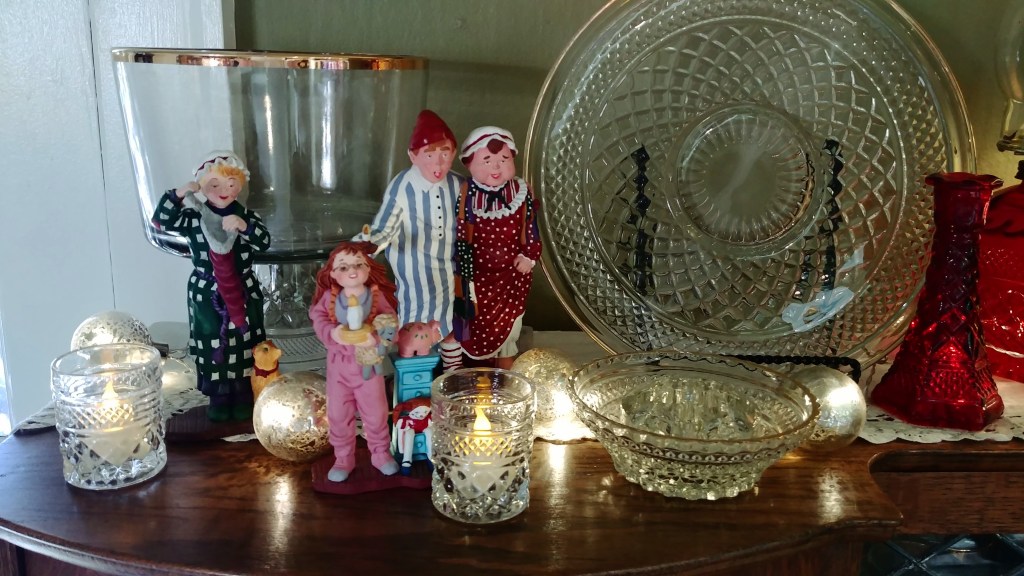
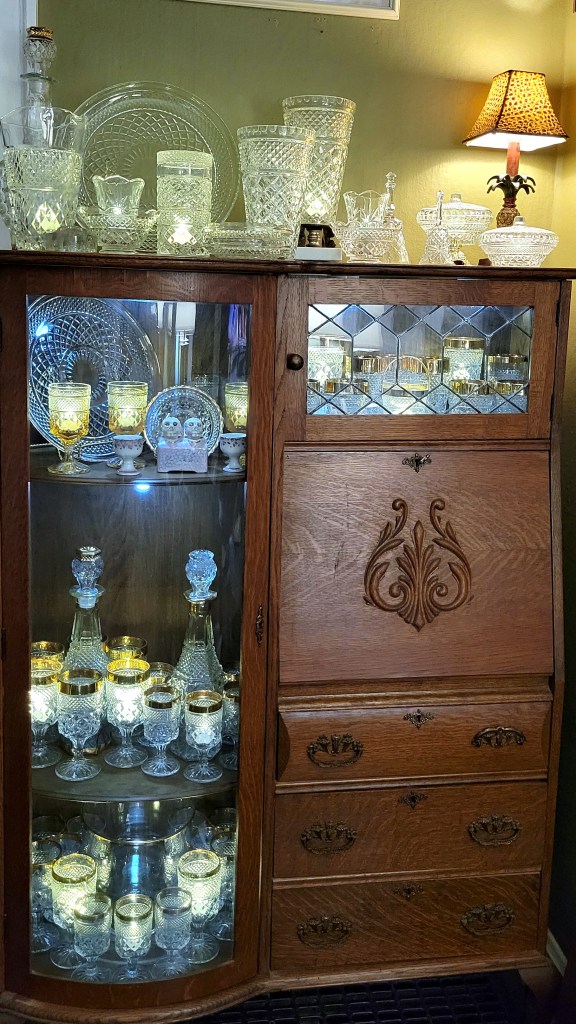
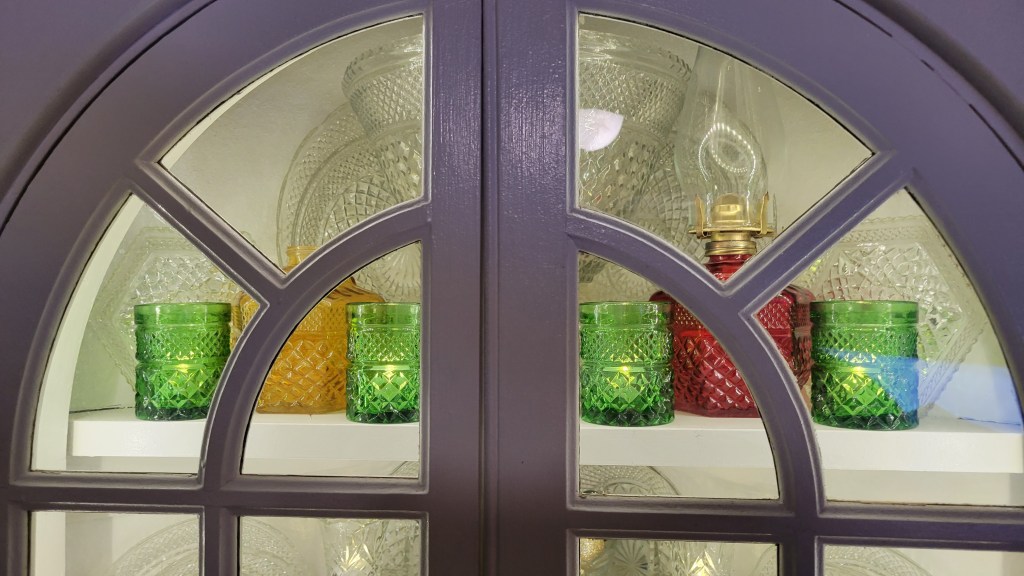
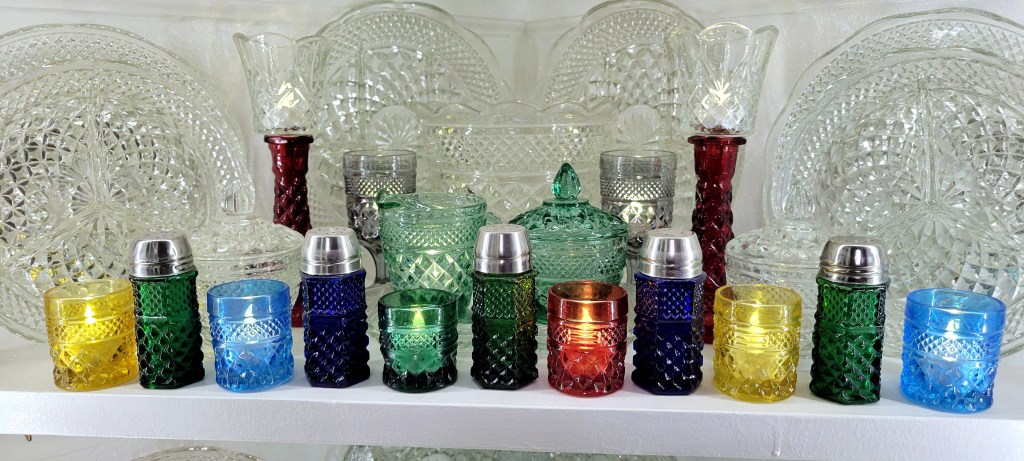
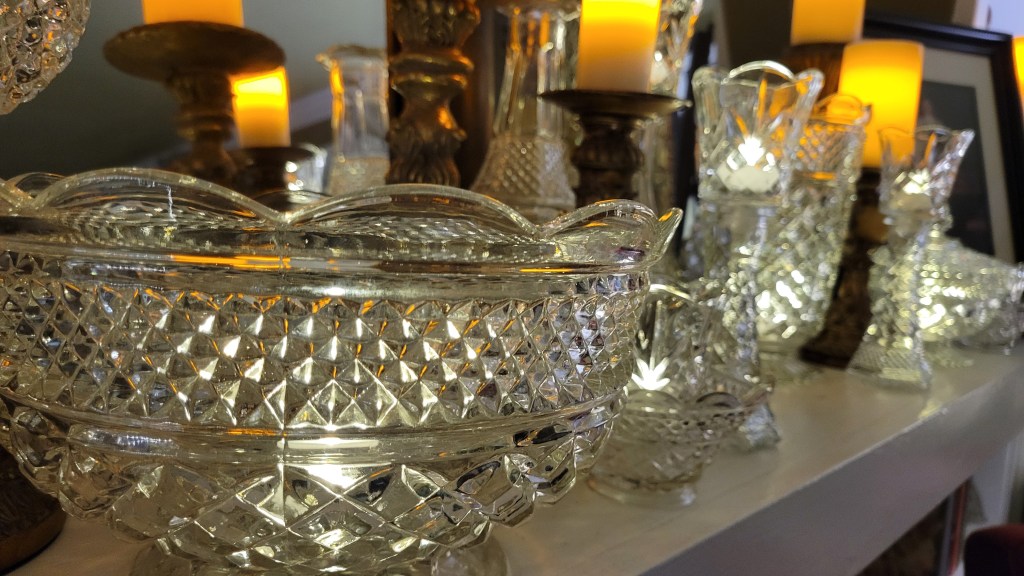
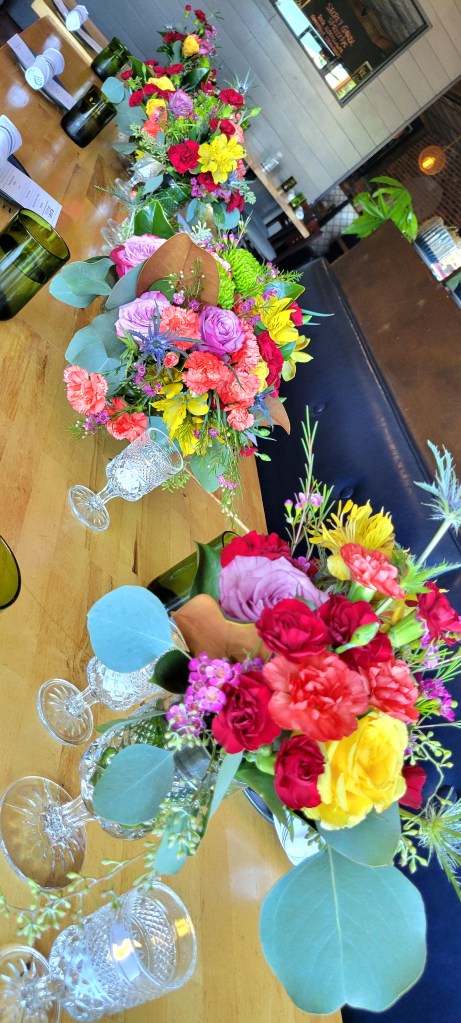
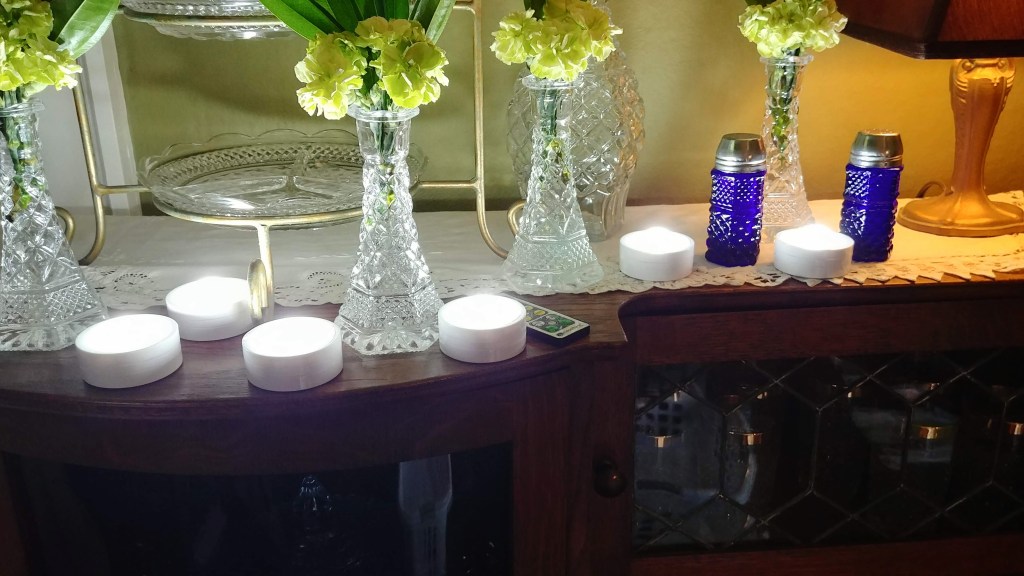
LED tealights provide a lot of versatility, and allow you to break a lot of rules about candles. They can be in a closed container since they don’t burn oxygen. So, covered sugar bowls, lidded candy dishes. They don’t need overhead clearance to avoid burn risk, so they can be on low-clearance shelves, they can be enclosed in a dsiplay cabinet. They are even available in remote-controlled sets, which means you don’t have to even open your dsiplay cabinet to light them. When I first invested in the remote controlled LED tealights, I bought three sets of twelve. all three sets are compatible with all three remotes, so I only need one with me as I walk through the house to turn them on or off.
I’d like to point out that many LED candles have a realistic flicker to mimic a burning candle, and that once it is down under the lip of its holder, the flicker is impactful and inviting.
And if fragrance is part of the attraction to burning candles for you, there are non-burning disfusers that offer safer scents for your space.
Bottom line: burning candles always comes with risk, but there are ways to mitigate them.

 wexford: a study